
About   Skinner Sights  

WHY?

A few years ago I developed an interest in learning to be a machinist.   I bought a small lathe and mill and started learning.   Hundreds of hours  later I'm becoming rather proficient at my new hobby.   Guns are also a fascination of mine and lever action Marlins are a passion.   I've carried one for years as I have packed in on horses and mules into the Bob Marshall, Spotted Bear,   Scapegoat and Mission Mountain wilderness areas around home.   The model 1895 in 45-70 is perhaps my favorite.   Second has to be the 1894 in 44 magnum.   Marlin sure did us a favor when they put Ballard rifled barrels on the 94 and 95.   I make paper patched bullets that shoot as good and as fast as any jacketed bullets for my rifles.

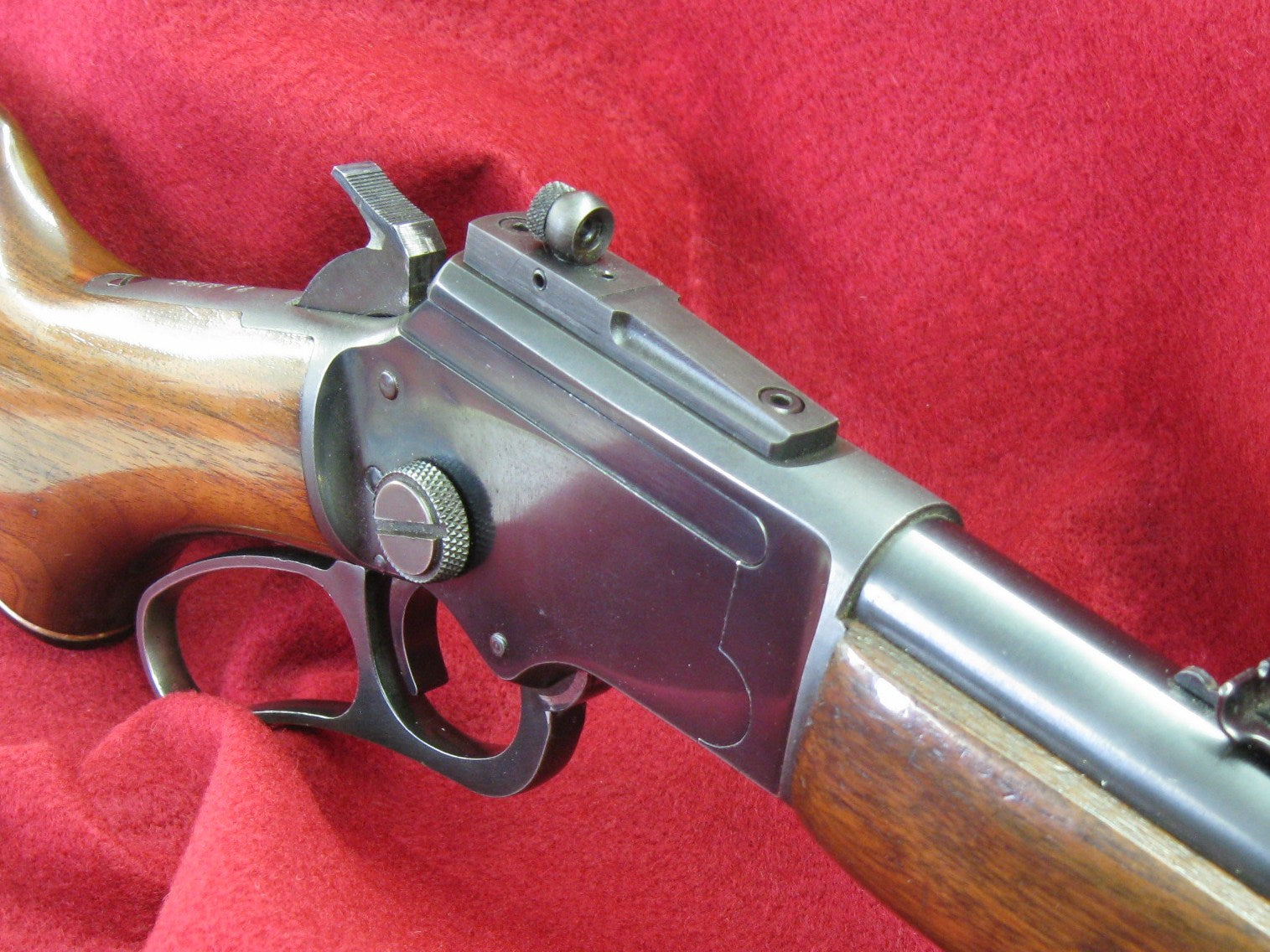
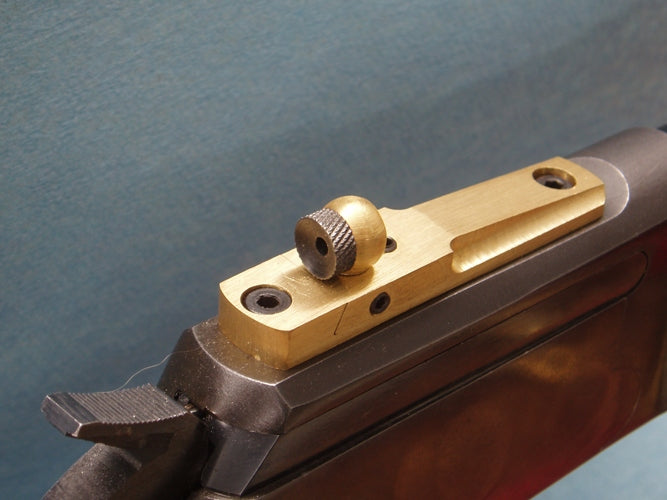
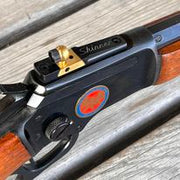
I never could find a rear sight I liked for the Marlin, so I began building some in my machine shop.   The first ones were awful looking and thank goodness only a few of my more stubborn friends still have them on their rifles.   Gradually I developed the current designs which work well,   are sturdy, and look like they belong on the gun.  I started making some out of Brass just for the heck of it and found I liked the look on my stainless steel rifles.   I've sold quite a few of them in brass and I sure like the finish I can get.  If you have a special order, I will do my best to make your design.  The cost is negotiable.

Front Sight Information

frontsight

I make front sights to order.  They cost $11 each .  I make ramp mounted sights standard at .450" as measured from the bottom of the dovetail to the top of the sight.  The barrel mounted sights are standard at .650" tall.  They are simple to shorten with a flat file since they are a post sight.  I make the blade standard at .050" wide, but I will make them any width the customer wants.

Directions for mounting front sights

 Remove the front sight from the rifle using a brass punch and a mallet.  Drift the sight from right to left.  If the front sight is mounted on a ramp, it is important to remember that the ramp is held in place with two small and rather short screws.  It is best to support the ramp on a block while removing the sight.
 Hold the new sight to the left side of the slot and try to start the sight.  If it will start then drift it into center position using the brass punch and mallet.  If you cannot start it by hand, you will need to use a small triangular file to remove some metal.  Very little filing will be necessary.  File a couple of strokes then check.  The dovetail on the sight is made slightly oversize due to variations in width of the dovetail slot on the gun.  The goal is a firm friction fit that cannot be moved by hand, but can be moved with gentle taps of a punch and mallet.

Front Sight Height Calculator

 When you are unable to adjust the rear sight to work for your rifle because the rifle shoots high you will need a taller front sight.  To eliminate the guesswork, you can calculate the additional height needed using the procedure below.

1.       Shoot your rifle at a known range (say 50 yards).  Note the distance you need the impact to change (say 6 inches lower).

2.       Measure the sight radius of your rifle (22 inches on most Marlins).

3.       The change needed is calculated by changing all measurements to inches, then multiply the sight radius by the desired change in impact and divide that product by the range in inches. 

4.       The result is the additional height needed for the front sight.  To get the height of the new front sight add the current height and the number from (3).

Example:

I need to shoot 6 inches lower at 50 yards with my 1894, 44 Mag. With a 22 inch sight radius.  My current front sight is .350” tall from the bottom of the dovetail to the top of the sight.

50 yards = 50X36=1800 inches

Desired height change is = 22 (sight radius)X6 (desired change)/1800(range)=.073 inches.  My new front sight needs to be .350+.073 or .423 inches tall. 

Installation and Adjustment of Peep Sights

95exp

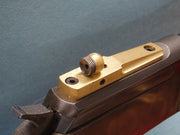
This is a picture of a 95 sight and it's parts before bluing.  You can see the dovetail piece and the peep sight.  

To install the 1895 or 336 sight it is necessary to remove the dovetail piece to tighten the mounting screw under the dovetail.  The 1894 sight and 39 sights do not require the removal of the dovetail to mount on the rifle.

Set screws


Windage adjustment is accomplished by sliding the dovetail piece left or right in its slot.  The fit is tight, so you may need a brass punch to move it.  Once adjusted it is locked in place with the set screw on top of the sight in front of the peep.   You move the rear sight in the direction you want to bullet impact to move.

Elevation Adjustment is accomplished by turning the peep on its threaded shaft to raise or lower the aperture.  One half turn will move the point of impact about 2 inches at 100 yards, depending on your sight radius.  The aperture can be threaded into the peep stem from either side.  Once adjusted, the peep stem is locked in place using the set screw on the side of the dovetail piece.


  Site Map